£3 Minimum Deposit Casinos in the UK: What to Know
 Available in GB
A low cashier threshold does not guarantee enough play, bonus eligibility or access to every payment method.

Table of Contents
- What a £3 Deposit Can—and Cannot—Do
- How to Check Whether a £3 Casino Is a Genuine Option
- What Happens After You Deposit at an Online Casino
- Using £3 for Real-Money Play on Mobile
- £3 Deposits, Welcome Bonuses and Free Spins
- Playing Slots on a Small Balance
- PayPal and Other E-Wallets: Check the Cashier Minimum
- What to Check When a Casino Is Described as New
- Can You Deposit £3 by SMS?
What a £3 Deposit Can—and Cannot—Do
A £3 deposit sits between the very lowest cashier minimums and the amounts many players may expect to use as a starting balance. Some UK casinos accept deposits from £1, so £3 is not the smallest possible amount everywhere. It is still a modest sum: whether it can be deposited depends on the operator’s rules, and what it can do once credited depends on the games and stakes available.
The important distinction is between a cashier minimum and a useful playing balance. A cashier minimum tells you the smallest amount the site will accept in a transaction. It does not promise that the amount will be enough to play for long, qualify for a promotion or meet the conditions for cashing out. Those are separate matters, set out in the casino’s terms.
So, a £3 minimum deposit casino in the UK is not necessarily a casino that lets every customer deposit exactly £3 in every circumstance. The amount may be accepted only through certain methods, or account-specific rules may apply. A site can also accept a deposit without making every feature available at that level. The word “minimum” describes an entry point, not a promise about the overall experience.
If you’re looking for a UK casino with a £3 minimum deposit in 2026, check the deposit terms before signing up, as no minimum-deposit details are provided here. The list below gives you the available payout-speed information for each operator.
Payout speed: 1-3 business days You can expect payouts to take 1–3 business days.
Payout speed: 1-3 business days You can expect payouts to take 1–3 business days.
Payout speed: 1-3 business days You can expect payouts to take 1–3 business days.
Payout speed: 1-3 business days You can expect payouts to take 1–3 business days.
Payout speed: 1-3 business days You can expect payouts to take 1–3 business days.
Payout speed: 1-3 business days You can expect payouts to take 1–3 business days.
Payout speed: 1-3 business days You can expect payouts to take 1–3 business days.
Payout speed: 1-3 business days You can expect payouts to take 1–3 business days.
Payout speed: 1-3 business days You can expect payouts to take 1–3 business days.
Payout speed: 1-3 business days You can expect payouts to take 1–3 business days.
There is a small but meaningful place for this amount. It can let you try a real-money account without committing more than £3 at the outset. That may help you decide whether the site’s layout, game selection and account controls suit you. But treating a small deposit as a way to make gambling risk-free would be a mistake. Any money staked can be lost, and a low starting amount does not change the nature of the activity.
There is also a difference between “a casino accepts deposits as low as £1” and “a £3 deposit will work for you”. A specialist review reported that six UKGC-licensed casinos had been verified with genuine £1 minimum deposits, but such findings can change as operators revise their cashiers. That is useful context for the low-deposit market, not a guarantee about a particular account today. The point is that £3 is plausible at some sites, not universal.
A small deposit can also make the available balance feel larger or smaller depending on how you use it. If you place repeated stakes, the balance can be used up quickly; if you stop after setting a limit, you retain control over how much you expose. Neither approach changes the odds of a game. No deposit size can make a result predictable, and there is no reliable way to turn a small balance into a larger one.
Before opening an account, set a financial limit that you can afford to lose. UK-licensed remote operators must prompt new customers to set a financial limit before their first deposit and provide account-level controls. Treat that prompt as a practical part of the decision, rather than something to click through. If £3 is the amount you have set aside, do not add more simply because the balance runs out sooner than expected.

The UK market is regulated: an operator offering real-money gambling to customers in Great Britain must hold the relevant UK Gambling Commission licence. You must be at least 18 to gamble online legally. These protections do not remove the possibility of losing your deposit, but they do distinguish a lawful UK-facing casino from an unlicensed site. A small amount is no reason to overlook the operator’s status or the account safeguards.
The “£3 minimum deposit” label can therefore describe a useful threshold, but it should not be read as a recommendation or an assurance of value. It tells you only that an operator may accept that amount. It does not establish how long you will play, whether you will receive anything extra, or whether you can withdraw a balance without meeting other conditions. Those details depend on the account’s rules and the particular activity.
If you are comparing minimum deposit casinos in the UK, keep the question narrow at first: can the account accept £3, and is that amount suitable for your own limit? A yes to the first does not require a yes to the second. You can decide that a site’s minimum is low while still deciding that depositing is not right for you. The useful measure is not how little a casino lets you pay in, but whether you understand what the amount permits and are content to risk it.
Attention: A small deposit is not a way to make gambling risk-free, and any money staked can be lost.
How to Check Whether a £3 Casino Is a Genuine Option
A casino’s homepage may describe a low minimum deposit, but the figure that matters is the one shown in your account’s cashier. Before paying, check that the minimum is actually £3 for your chosen payment method and that the cashier accepts that amount without requiring you to add more. A £3 option is genuine only if the transaction can be completed at that level under the terms that apply to your account.
Start by opening the deposit screen and selecting the method you intend to use. The amount displayed before you confirm is more useful than a promotional banner or an old review: payment options and account terms can change. Check whether £3 is an available amount, whether the cashier states a higher minimum, and whether any conditions appear when you select the method. If the minimum is unclear, do not assume that a listed £3 deposit applies to every route.
At a given UK operator, the cashier minimum is often shared across payment methods, but some casinos set a higher threshold for direct banking than for cards or e-wallets. That difference can make a site appear to accept £3 while leaving you unable to deposit that amount using your preferred route. Read the payment-specific wording rather than relying on a general statement about the casino’s minimum.
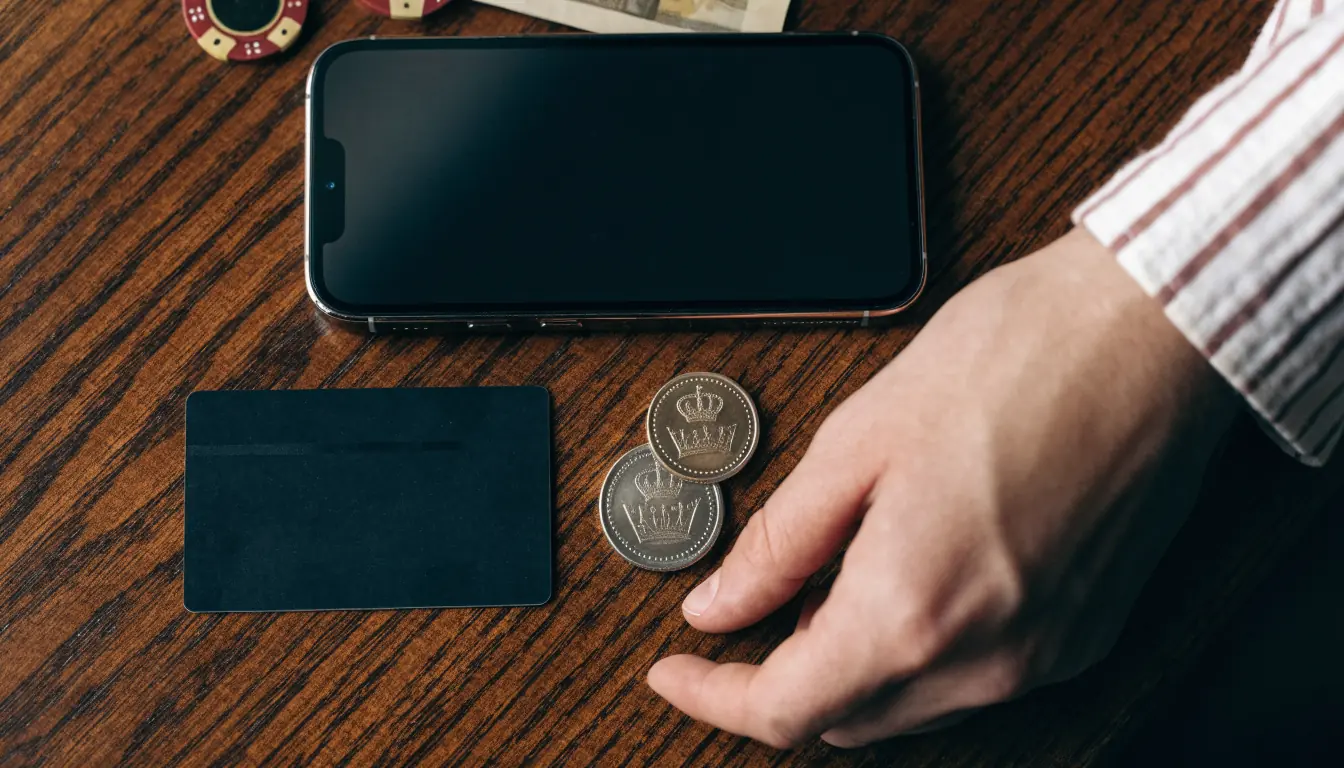
Check the payment rules before confirming
Use a payment method permitted for gambling deposits in the UK. A debit card, an e-wallet funded by debit, or a bank account can be used where the operator supports it. Credit cards are not permitted for gambling deposits, including when their funds are routed through a money service business. Nor should a wallet be used if it allows credit-card funds to be used for gambling.
The cashier should identify the available method and the minimum that applies to it. Confirm that the account name and payment details match the requirements stated by the operator, and read any on-screen notice before proceeding. If the amount changes after you select a method, treat the revised minimum as the relevant one. Do not try to work around a stated limit by splitting or rerouting a payment.
A low cashier minimum does not, by itself, establish that a casino is safe or legitimate. For real-money gambling in Great Britain, the operator must hold the relevant UK Gambling Commission licence. Check that the site identifies its operating licence and that the details correspond to the operator you are using. A site that cannot be matched to a current UK licence is not a suitable place to deposit, even if its cashier appears to accept a small amount.
There are other basic safeguards to look for. The operator must verify your age before allowing a deposit; UK players must be at least 18. New customers must also be prompted to set a financial limit before their first deposit, with account-level controls available. Take time to set a limit that fits your circumstances rather than treating a small starting deposit as a substitute for one.
Check Your Casino
- Open the deposit screen and select your payment method
- Verify that the minimum is actually £3 for that method
- Check that the operator holds a current UK Gambling Commission licence
- Confirm your age is verified (18+)
- Set a financial limit before your first deposit
Read the withdrawal terms as carefully as the deposit terms
A deposit minimum tells you how much you can put in, not how easily you can take money out. Before paying, find the cashier’s withdrawal rules and identify the minimum withdrawal amount, any payment-method restrictions and any verification steps. Check whether the same route must be used for deposits and withdrawals, and whether the operator explains what happens if your balance is below its cash-out threshold.
A specialist review has reported withdrawal minimums of £10 to £20 at many UK casinos, but that is not a guarantee of the terms at any particular site. Treat it as a reason to inspect the operator’s own current rules, not as a figure to assume. If the cashier minimum is £3 but the withdrawal threshold is higher, you may need to leave a balance in the account until it reaches the required amount. Make sure you understand that before depositing.
Also look for restrictions that could affect the amount available to withdraw, including identity checks and any conditions attached to account funds. The operator should explain its process and provide an internal complaints route and access to an approved Alternative Dispute Resolution service. If a withdrawal rule is difficult to find or written in a way you cannot understand, ask customer support for clarification before you commit money.
A practical check is to review the deposit and withdrawal pages while logged in, then compare their terms with the figures shown in the cashier. Save or note the wording that applies to your selected payment method, especially if the displayed minimum differs from a general page description. If the cashier will not accept £3, states a different threshold, or leaves the withdrawal rules unclear, pause rather than increasing your deposit simply to make the transaction work.

That is the distinction between a site that mentions a £3 minimum and one where £3 is genuinely available to you: the selected method must accept it, the operator must be properly licensed, and the withdrawal conditions must be clear before you pay.
What Happens After You Deposit at an Online Casino
Once a casino accepts a £3 deposit, the money should appear in your account balance and become available for real-money play, subject to the operator’s account rules. That is the practical meaning of an online casino with a £3 minimum deposit: you can start with a small amount, but the deposit itself does not tell you how long it will last or whether you can withdraw a small balance.
Before a first deposit, a UK-licensed operator must verify that you are at least 18 and prompt you to set a financial limit. Take that step seriously. A limit gives you a boundary for spending before play begins, rather than asking you to make a decision after money is already in the account. If the account is not ready for deposits, follow the operator’s verification instructions rather than trying to get around them.
After the deposit is credited, check the balance shown in your account before opening a game. It should be clear whether you are looking at cash funds or another type of balance. If the amount does not appear as expected, pause and check the account history or contact customer support. Depositing again to solve an unclear balance can leave you with more money in the account than you intended.
UK-licensed remote operators must prompt new customers to set a financial limit before their first deposit and provide account-level controls.
The balance then changes as you place bets and receive any winnings. A £3 starting amount is not the same as a useful session budget: its practical value depends on the stakes you choose and how quickly the balance changes during play. Even a game that permits small bets can use up a limited balance quickly. Decide in advance what you are comfortable losing, and stop when that limit is reached; do not treat a further deposit as a way to recover earlier losses.
The amount available to play is also distinct from the amount you may be able to withdraw. A casino can set a minimum withdrawal threshold that is higher than your current balance. A specialist review has reported thresholds of £10 to £20 at many UK casinos, but that is a report about particular terms, not a fixed rule for every operator or an assurance that those figures apply to your account. The withdrawal rules shown by the casino are the ones that matter.
This difference can catch out someone who deposits a small amount, plays briefly and then wants to cash out what remains. If the balance is below the operator’s withdrawal threshold, you may have to leave it in the account until it reaches the stated amount, subject to the casino’s rules. That does not mean you should keep playing to reach a target: additional play can reduce the balance instead. Read the withdrawal instructions before you make a decision about what to do with remaining funds.

When you request a withdrawal, the operator processes it under its account and security procedures. You may be asked to complete checks or provide information before the request can proceed. Make sure your account details are accurate and read any message from the casino carefully. A displayed balance is not always the same as money already paid out, so keep track of whether the request is pending, completed or needs action from you.
A small deposit can therefore be a way to try real-money play without putting a larger sum into the account at the outset, but it is not a promise of a particular playing time or an easy cash-out. The sequence is straightforward: the operator approves the account and deposit, the funds become playable, bets affect the balance, and a withdrawal request is handled under the casino’s terms. Each step has a different status, so check the account rather than assuming that deposited, playable and withdrawable funds mean the same thing.
Only use an online casino that holds the required UK Gambling Commission licence to serve players in Great Britain. Legal online gambling in the UK is for adults aged 18 and over, and a licensed operator must verify age before allowing a deposit. If you are unsure whether you want to continue, leave the money unplayed and use the account’s available controls rather than depositing more.
Using £3 for Real-Money Play on Mobile
A £3 balance can be enough to begin real-money play on a phone, but it leaves little room for error. Before opening a game, decide how much of that balance you are prepared to spend and set a financial limit in your account. UK-licensed operators must prompt new customers to set a limit before their first deposit and make account-level controls available. A small starting amount is not a substitute for deciding where your own stopping point lies.
Funding Sources
Credit cards are not permitted for gambling deposits, and e-wallets must not be used if they allow credit-card funds to be used for gambling.
The amount shown in the cashier is not always the amount that reaches the casino account. A specialist review has reported flat transaction charges of £1 to £3 from some payment providers. That is a substantial deduction from a £3 payment, so check whether your chosen provider charges a fee before confirming anything. The charge may apply to the transaction rather than to your game balance, but either way it changes the cost of getting started. If the fee is unclear, do not assume the full amount will arrive.
Debit cards are a familiar route on mobile: Visa and Mastercard are widely accepted and can support low minimum deposits. UK gambling deposits must come from permitted sources such as debit cards, e-wallets funded by debit, or bank accounts. Credit cards cannot be used for gambling, including through a money service business, and an e-wallet must not be used if it allows credit-card funds to pay for gambling. Check the funding source, not just the payment logo displayed on screen.
Once the money is in your balance, the phone interface can make it easy to tap through games quickly. Pause before each stake and check the amount shown on the game screen; a small balance can shrink after only a few decisions. Many slot games allow stakes in the 10p-to-20p range, but the exact controls differ by game. That is one possible way to keep each individual stake modest, not a promise that a session will last for any particular time or produce a return.
Mobile play also has practical distractions. A small screen can make buttons and balance figures harder to read, especially if you are switching between the game and another app. Confirm the stake before each spin and watch the displayed balance rather than relying on memory. Online slots in Britain do not offer autoplay, and each spin must last at least two and a half seconds. Those safeguards do not prevent losses, but they mean play is not designed to run unattended at speed.

Real-money casino play in the UK is for adults aged 18 or over and must take place with an operator holding a current UK Gambling Commission licence. Before depositing, make sure age verification is complete and the account is ready for play; operators must verify age before allowing a deposit. If you notice that you are raising stakes to recover money or continuing after reaching your limit, stop and use the account controls rather than adding more funds. £3 is a spending amount, not a target you need to turn into a larger balance.
£3 Deposits, Welcome Bonuses and Free Spins
A casino can accept a £3 deposit without making that amount eligible for its welcome promotion. The cashier minimum and the promotion’s qualifying deposit are separate conditions: the first governs whether you can fund the account, while the second determines whether the offer is added. Some UK casino terms exclude the lowest deposit bracket from welcome promotions, and a specialist review has described offers requiring deposits in the £5 to £10 range. Those figures are not a substitute for the terms shown to you now; check the offer attached to your account before depositing.
If the promotion requires more than £3, depositing the smaller amount may still put funds in your account, but it will not trigger that offer. Do not assume that making a second deposit will qualify either. The terms may specify that only one qualifying deposit counts, or set other eligibility rules. If you intend to play without a bonus, check whether you can decline the promotion before accepting it.
- Check the qualifying deposit for welcome promotions
- Verify if the offer is optional
- Check the wagering rules and withdrawal caps
- Assume a £3 deposit automatically triggers a bonus
- Rely on headline wording as proof of qualification
- Assume a second deposit will qualify you for an offer
A “no deposit bonus” is different: the phrase refers to an offer that does not require a qualifying deposit, not to a £3 deposit offer. Its availability and conditions still need to be checked in the operator’s current terms. Do not treat wording in a promotion headline as proof that you qualify, or as a promise that funds or free spins will be credited automatically.
Read the wagering condition carefully
When a welcome offer includes bonus funds, wagering requirements specify how much qualifying play is required before the bonus-related balance can be withdrawn. Older specialist reviews have reported requirements ranging from 30x to 65x the bonus value. However, since 19 January 2026, UK Gambling Commission rules cap wagering requirements for bonus funds at 10x. If you see a higher requirement on a promotion for UK customers, do not assume it overrides the current rule: check the operator’s terms and contact its support team before opting in.
The multiplier is not the same as a cash amount you must deposit. It is applied to the bonus value, so the amount of play required depends on the bonus credited. A small qualifying deposit does not necessarily mean a small wagering requirement if the offer awards a separate bonus. Check which balance the requirement applies to, which games count, and whether any maximum withdrawal condition is attached. These details can affect what you can withdraw even after the stated wagering is complete.

Free spins need their own check. A promotion may award spins but apply wagering conditions to any winnings they produce. Older specialist reviews have cited requirements of 30x to 65x the total free-spin winnings; for a current UK offer, the applicable terms must reflect the 10x cap on bonus wagering. Confirm how the operator classifies spin winnings and what amount the multiplier is applied to. A displayed win is not necessarily an immediately withdrawable balance.
Before accepting any promotion, check the qualifying deposit, whether the offer is optional, the wagering rule, eligible games and any withdrawal cap. UK gambling incentives cannot require more than 10x wagering of bonus funds. Make a spending limit before depositing, and remember that UK-licensed casinos are for adults aged 18 and over.
Playing Slots on a Small Balance
A £3 balance can cover a different number of slot spins depending on the stake selected. Many slots allow bets of £0.10 to £0.20 per spin. If you played at those amounts and had no wins, £3 would cover 30 spins at the lower stake or 15 at the higher one. That is a simple calculation, not a forecast: wins may add to the balance, while losses reduce it, so the actual number of spins can be shorter or longer.
Check the stake controls before you start. A game may offer several bet sizes, and the amount displayed can depend on settings such as the number of paylines or the value assigned to each coin. Make sure you understand the total cost of one spin rather than relying on a small-looking figure in a control. If the minimum stake is above what you intended to spend, choose another game or stop; the balance does not need to be used up.
Slot Stake Calculation
Select a bet size, for example, £0.10 or £0.20 per spin.
With a £3 balance, £0.10 per spin covers 30 spins, while £0.20 covers 15 spins (assuming no wins).
Check the total cost of one spin on the game screen before clicking, rather than relying on small figures in the controls.
A £3 minimum deposit does not mean every slot can be played with a £3 balance. The cashier amount and the game’s available stakes are separate things. If a slot’s minimum bet is higher than your remaining funds, you cannot make another spin on that game. Even when the smallest stake is affordable, a few unsuccessful spins can leave too little for the next one. There is no stake that guarantees a particular number of spins or a return.
It can help to decide on a per-spin amount and a firm spending limit before opening a game. Keep the stake consistent with the balance you are prepared to lose, and do not increase it to try to recover losses. If a slot allows a choice of bet size, select it deliberately and confirm the total wager shown on screen before each spin.
A small balance also makes changes in stake more noticeable. Moving from £0.10 to £0.20 doubles the amount put at risk on each spin, so the same balance would cover half as many spins if there were no wins. That does not make either stake safer or more likely to pay out; it only changes how quickly the balance is used.
In Britain, online slot autoplay is not permitted, and each spin must last at least 2.5 seconds. You therefore need to start spins individually rather than setting a sequence to run automatically. This gives you a chance to check the stake and remaining balance each time, but it does not change the game’s outcome.

Before depositing, set a financial limit and use the account controls to keep play within it. Treat the £3 as money you may lose in full, rather than as a target number of spins or a way to secure a win.
PayPal and Other E-Wallets: Check the Cashier Minimum
A £3 deposit through PayPal is not something you can assume will work at every UK casino. PayPal may appear among the available payment options, but the operator’s cashier sets the amount you can deposit. Check the minimum shown there while logged in, rather than relying on a general description of the site or on another player’s experience.
At a given operator, the cashier minimum is generally the same across payment methods. There can be exceptions: some casinos set a higher minimum for direct banking than for cards or e-wallets. That does not establish that PayPal will accept £3 at that casino. The payment option and its own stated minimum need to be checked together.
Look for the deposit screen’s minimum and any payment-specific terms before confirming. If the cashier rejects £3 or asks for a higher amount, do not assume that changing to another e-wallet will solve it; check the amount shown for that option instead. The available minimum can depend on the casino’s settings, so a figure seen elsewhere may not match the terms on your account.
UK rules also affect how an e-wallet can be used for gambling. The credit-card gambling ban introduced in 2020 means your casino deposit must be funded through an allowed source, such as a debit card, a debit-funded e-wallet or a bank account. A wallet that lets credit-card funds be used for gambling is not an acceptable workaround. Check the wallet’s funding source as well as the casino’s payment instructions.
Some casinos may set a higher minimum deposit threshold for direct banking than they do for cards or e-wallets.
Before making a first deposit, set a financial limit using the casino’s account controls. If the cashier confirms that £3 is accepted through PayPal, that only confirms the deposit amount and route; it does not change the operator’s other account terms. If it does not, pause rather than adding more money simply to reach a higher minimum.
What to Check When a Casino Is Described as New
A “new” label does not tell you whether a casino will accept a £3 deposit. The wording “3036” is not proof of a launch date, a current offer or a cashier minimum. Treat both as reasons to check the account information shown now, rather than as evidence that the site suits your budget.
Open the cashier and look at the minimum displayed for the payment method you intend to use. At a given UK operator, the minimum is generally shared across payment methods, but some casinos set a higher threshold for direct banking than for cards or e-wallets. A figure shown in an old review, advert or comparison page may not match the terms presented when you sign in. If the cashier will not accept £3, do not assume another route will; check its displayed terms before choosing it.
Read the account conditions as well as the payment screen. Confirm that you can use the selected method for gambling deposits and that the account is available to you as a UK player. A site describing itself as new does not, by itself, establish that it is authorised to serve customers in Great Britain. Remote operators offering gambling to British customers must hold the relevant UK Gambling Commission licence.
Before depositing, make sure the account has completed the required age verification. UK players must be at least 18, and operators must verify age before allowing a deposit. You should also be prompted to set a financial limit before your first deposit; use that step to decide what you can afford to lose, rather than relying on a small cashier minimum to control spending.

If the cashier, account terms and site description do not agree, pause and seek clarification through the operator’s support channel. A fresh name or date-like wording cannot replace clear, current terms for your own account.
Can You Deposit £3 by SMS?
A casino may describe a payment option as “pay by SMS”, but that label does not tell you whether a £3 deposit will go through. Carrier-billed payments can have their own limits, and the amount accepted may depend on both the casino’s cashier and the mobile payment provider. Check the minimum shown for that method before choosing it; do not assume that an advertised minimum deposit applies to every route.
The cashier minimum is commonly shared across payment methods at one operator, although some casinos set a higher threshold for a particular option. Mobile billing may therefore be unavailable at £3 even when another method accepts that amount. Conversely, a low figure mentioned in a review is not proof that the same option is currently available to your account. One specialist review describes £1 as a rare starting point associated with particular mobile-billing services, including Boku and Payforit; treat that as a report about specific arrangements, not a promise about every casino.
Before confirming, check how the charge will be collected and whether the casino and provider permit that route for gambling deposits. UK-licensed casinos cannot accept credit-card payments for gambling, including credit-card funding routed through a money service business. If the payment would draw on credit, do not use it. A direct debit to a phone account is not the same thing as an e-wallet, so verify the actual funding source rather than relying on a broad payment label.
You must be at least 18, and the operator must verify your age before allowing a deposit. It must also prompt you to set a financial limit before your first deposit, with account-level controls available. Set a limit you can afford before you proceed, then confirm the deposit amount and any provider restrictions in the live cashier. If the £3 option is not explicitly offered, choose another permitted method or do not deposit.
Do direct banking deposits qualify for welcome bonuses at UK-licensed casinos?
Yes, direct banking deposits can qualify on the same basis as card or e-wallet deposits. The bonus terms, including wagering requirements and game restrictions, apply regardless of the payment method.
What is the smallest deposit I can make at these casinos?
The lowest deposit tier is £1, although it is uncommon and may be limited to specific payment methods. Check the cashier’s minimum for your chosen method before confirming.
Can players claim a bonus with a small deposit?
Sometimes, but welcome offers typically require a deposit of £5 to £10, and some bonuses have a £10 qualifying minimum. A £1 deposit generally will not activate a welcome offer.
What is the lowest deposit available at UKGC-licensed casinos?
The lowest reported minimum is £1, but it is rare and may be restricted to certain payment methods. Check the casino’s cashier to confirm the minimum for your account and chosen method.
Which payment method is best for low-deposit casino players?
A debit card is a practical option: Visa and Mastercard debit cards are widely accepted and support low minimum deposits. Check the cashier’s minimum for the specific card option before depositing.
Prepared by the Candyland Casino 3 editorial staff.